Introduction
With millions of sports fans following cricket, football, and esports across India, online betting platforms have seen unprecedented adoption. Among international sites, Stake stands out as a dominant player due to its slick interface, instant crypto payouts, and high-stakes casino games.
However, before creating an account and depositing funds, every Indian bettor needs to know: Is Stake legal in India, or are you taking a serious risk with your money?
Here is the quick, honest breakdown of where Stake stands under Indian law today.
The 60-Second Answer
Is Stake legal in India? It depends on where you live and how you pay.
- Federal Law: There is no overarching federal law in India that explicitly bans individuals from placing bets on foreign (offshore) websites like Stake.
- State Laws: States such as Telangana, Andhra Pradesh, Tamil Nadu, and Odisha have strict bans on all online real-money gambling. If you live in these states, using Stake is illegal.
- Banking & RBI: Using Indian banks or credit cards to transfer money abroad for betting violates FEMA regulations.
How Stake Operates in India’s “Grey Market”
Stake is registered under an international gambling license in Curaçao. Because it operates entirely from servers located outside Indian territory, Indian authorities cannot directly license or regulate Stake’s backend operations.
This status creates what experts call a “grey market.”
- Stake is not an registered, Indian-licensed entity.
- It does not fall under domestic Indian consumer protection bodies.
- If a payment dispute or account suspension occurs on an offshore platform, Indian users have limited legal recourse through local Indian courts.
Deposits & Withdrawals: What Are the Risks?
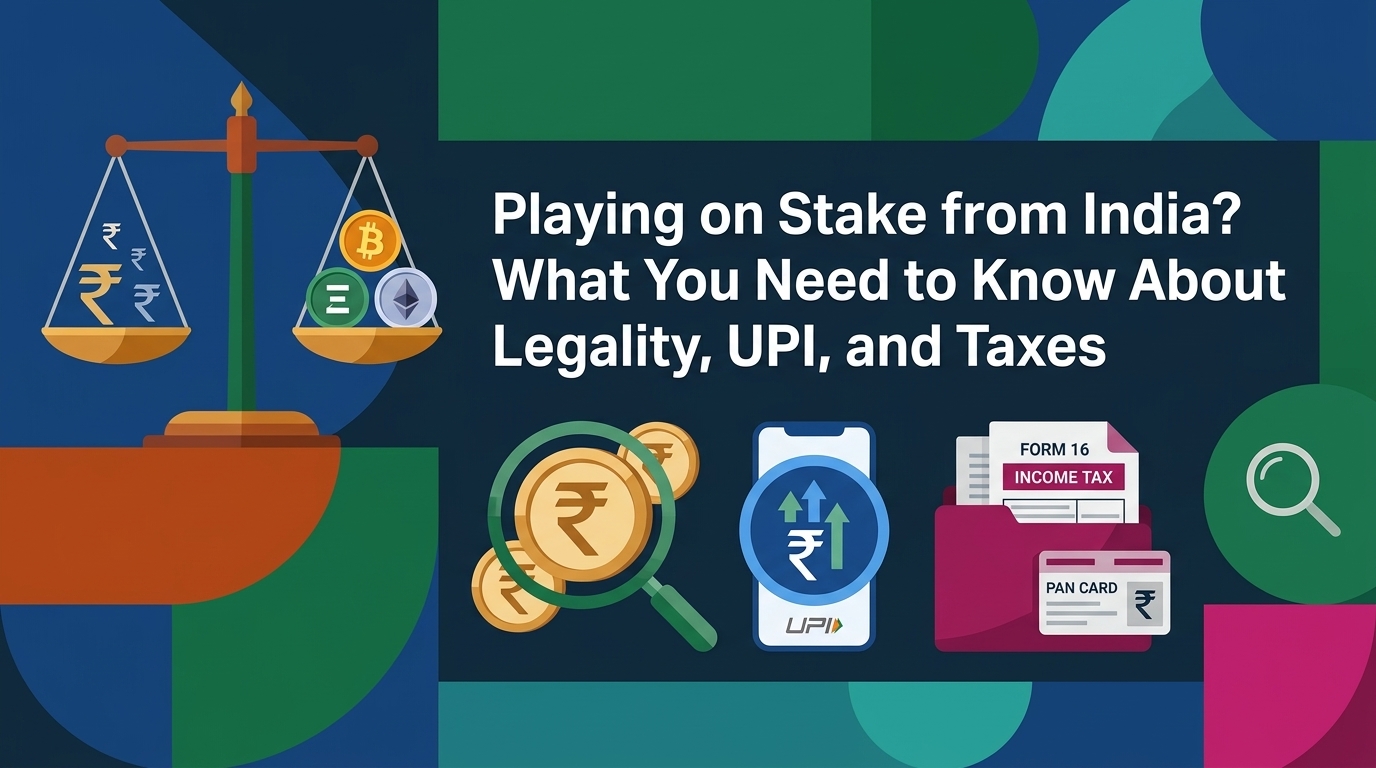
While Stake frequently offers local payment interfaces like UPI, Paytm, and IMPS via third-party payment aggregators, using these methods carries operational risks:
[ Your Indian Bank Account ] ---> [ Third-Party Aggregator ] ---> [ Stake Offshore Wallet ]
- Bank Account Freezes: Indian banks routinely monitor accounts for unusual transactional patterns connected to unauthorized gaming merchants. Accounts receiving frequent transfers from gray-market payment nodes risk temporary or permanent freezes.
- Crypto Regulations: Depositing via crypto (USDT, BTC) avoids domestic UPI disruptions, but transferring crypto directly from Indian KYC-compliant exchanges to foreign gambling addresses can flag your exchange account under AML (Anti-Money Laundering) algorithms.
Do You Have to Pay Tax on Stake Winnings?
Yes, absolutely. Indian tax laws apply to your global income, regardless of where the platform is located.
- Tax Rate: All income earned through online betting, gambling, or games of chance is subject to a flat 30% tax rate under Section 115BB of the Income Tax Act.
- No Deductions: You cannot offset losses against gains or claim operational expenses.
- Self-Reporting: Domestic apps (like Dream11 or My11Circle) automatically deduct 30% TDS on net winnings. Offshore platforms like Stake do not withhold tax for the Indian government—meaning you must manually declare these earnings when filing your taxes to avoid tax evasion penalties.
Summary Checklist: Before You Play on Stake in India
Before registering or betting on Stake, review these essential safety checks:
- ✅ Check Your Location: Ensure you are not residing in a state with explicit online gambling bans (Telangana, Andhra Pradesh, Tamil Nadu, Odisha).
- ✅ Understand Payment Risks: Be aware that using Indian bank accounts or UPI for offshore gambling can result in flagged accounts or blocked transactions.
- ✅ Declare Your Taxes: Keep strict records of all deposits, withdrawals, and crypto conversions to ensure proper 30% tax reporting on your annual ITR.
- ✅ Gamble Responsibly: Treat online gaming as entertainment, never spend money you cannot afford to lose, and use Stake’s built-in self-exclusion and limit tools.